16m
49 curated talks and interviews from relationship scientists, clinicians, and researchers — with key takeaways and related topics.
Featuring: John Gottman · Esther Perel · Helen Fisher · Sue Johnson · Brené Brown · Andrew Huberman · Robert Waldinger · Bessel van der Kolk · Emily Nagoski · Kristin Neff · Logan Ury · Dan Gilbert · and more
Views expressed by featured speakers are their own and may not reflect Amor Index's evidence tiers or editorial positions.
Showing 49 videos
World-renowned relationship scientist John Gottman presents the core findings from his 40-year laboratory study of couples — including the Four Horsemen of the Apocalypse and the 5:1 positivity ratio that predicts relationship success with 94% accuracy.
The School of Life's elegant explainer on the four attachment styles — secure, anxious, avoidant, and fearful-avoidant — and how childhood experiences with caregivers shape adult relationship patterns.

An accessible overview of how the four attachment styles manifest in adult romantic relationships — the specific patterns, triggers, and behaviours that characterise each style, and what partners of each style need to feel secure.
A TEDx talk connecting Bowlby's attachment theory to the neuroscience of adult love — how the same neural circuits that govern infant-caregiver bonding underpin adult romantic attachment, and what this means for how we understand heartbreak and healing.

Sue Johnson, creator of Emotionally Focused Therapy (EFT), demonstrates her attachment-based approach to couples therapy — showing how identifying and changing negative interaction cycles can transform even deeply distressed relationships.

Andrew Huberman explains the neuroscience of heartbreak — why breakups activate the same brain regions as physical pain, how grief is processed neurologically, and the evidence-based protocols for accelerating emotional recovery after a relationship ends.

Biological anthropologist Helen Fisher presents her fMRI research on the brain in love — the three distinct brain systems for lust, romantic love, and attachment — and why these systems can operate independently, leading to infidelity.
Harvard psychologist Dan Gilbert presents the research on 'synthetic happiness' — the finding that humans are far better at adapting to negative outcomes than they predict, with profound implications for how we make relationship decisions.

Paul Zak, the 'oxytocin researcher', presents his findings on the neurochemistry of trust and bonding — how oxytocin mediates social connection, what triggers its release, and the implications for understanding love and commitment.

Bessel van der Kolk, author of 'The Body Keeps the Score', explains how trauma is stored in the body and nervous system — and why talk therapy alone is often insufficient for healing relational trauma.

Julie and John Gottman show that conflict is inevitable in all relationships — but the first three minutes of an argument predict the entire outcome with 96% accuracy. They teach the 'soft start-up' and repair attempt techniques.

The Gottmans in conversation with TED's How to Be a Better Human podcast — covering the Sound Relationship House model, the research on what makes couples thrive, and practical tools for building a stronger relationship.
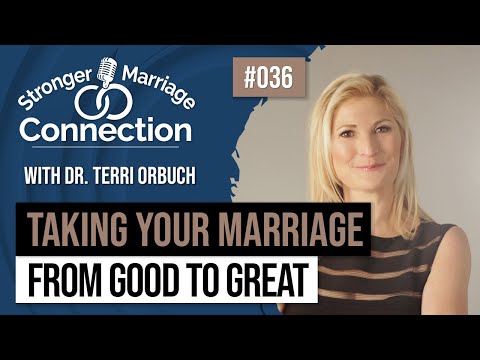
Dr Terri Orbuch, sociologist and author of '5 Simple Steps to Take Your Marriage from Good to Great', presents findings from her 30-year longitudinal study of couples — identifying the specific behaviours that distinguish thriving marriages from struggling ones.

The Gottman Institute presents the research-based tools for managing conflict constructively — the antidotes to the Four Horsemen, the role of physiological self-soothing, and how to turn conflict into an opportunity for deeper understanding.

Radio host Celeste Headlee presents ten rules for having better conversations — grounded in the research on active listening, presence, and genuine curiosity. The principles apply directly to intimate relationships and conflict resolution.

Dr Gary Lewandowski, relationship researcher at Monmouth University, presents the research on breakup recovery — including the finding that breakups can be opportunities for self-expansion and growth, not just loss.
AsapSCIENCE presents the neuroscience of breakup recovery — what is happening in the brain during heartbreak, why it feels like physical pain, and the evidence-based strategies that accelerate healing.

Helen Fisher presents her fMRI research on the brain experiencing romantic rejection — showing that heartbreak activates the same reward circuitry as romantic love, explaining why we obsess over ex-partners and why the pain of rejection is so intense.

A psychology-based explanation of why the no contact rule is effective after a breakup — the neurological mechanisms of attachment disruption, the role of space in emotional processing, and what the research says about contact vs. no contact outcomes.

The School of Life explores the psychology of idealising ex-partners — why memory distorts our perception of past relationships, how nostalgia amplifies positive memories while suppressing negative ones, and how to see the past more clearly.
TED-Ed's animated explainer on narcissistic personality disorder — the spectrum from healthy self-confidence to pathological narcissism, the neurological and developmental roots, and why narcissists are both attractive and destructive in relationships.

Dr Ramani Durvasula, clinical psychologist and leading expert on narcissistic abuse, presents the specific behavioural patterns that characterise narcissistic relationships — from love bombing and idealisation to devaluation and discard.

Dr Ramani Durvasula explains gaslighting — the systematic manipulation of a partner's perception of reality — the specific tactics used, the psychological damage it causes, and how to begin trusting your own perceptions again.

Dr Ramani Durvasula explains the psychology of trauma bonding — the powerful attachment that forms in relationships characterised by cycles of abuse and affection — and why it is so difficult to leave even when the relationship is clearly harmful.

A clear explanation of the cycle of abuse — tension building, incident, reconciliation, and calm — and why victims often stay through multiple cycles before leaving. Grounded in the research of Lenore Walker.

Julie and John Gottman, who have been both research partners and life partners for decades, share the most important lessons from 50 years of studying what makes relationships last — and what they have learned from their own marriage.
Esther Perel, the world's most influential couples therapist, reframes infidelity not as a moral failure but as a window into the unmet needs, desires, and longings of a relationship.

Robert Waldinger, director of the Harvard Study of Adult Development, presents findings from the longest-running study of adult life — showing that the quality of our relationships is the single most powerful predictor of health and happiness.
Brené Brown's follow-up TED talk on the cultural and personal costs of armoring up against vulnerability — and why the willingness to show up and be seen is the foundation of lasting love and connection.

Daniel Goleman, who popularised the concept of emotional intelligence, presents the specific EQ competencies that predict relationship success — self-awareness, self-regulation, empathy, and social skill.

Esther Perel explores the paradox at the heart of long-term love: the very things that create security are the enemies of desire. She argues that maintaining erotic aliveness requires cultivating mystery and separateness.

Emily Nagoski, author of 'Come As You Are', presents the dual control model of sexual response — the accelerator and brake system — and why understanding this model is essential for maintaining desire in long-term relationships.
Sarri Gilman presents a simple but powerful framework for understanding and setting boundaries in relationships — the compass model — and why the inability to set boundaries is not a character flaw but a learned pattern that can be changed.
Brené Brown presents her BRAVING framework for trust — the seven elements that build and maintain trust in intimate relationships — and why trust is built in the smallest moments, not through grand gestures.
Brené Brown's follow-up to her viral vulnerability talk — exploring the difference between shame and guilt, why shame is corrosive to relationships, and how vulnerability is the antidote to shame.

Charles Duhigg, author of 'The Power of Habit', explains how the habit loop operates in relationships — and how understanding it can help couples break destructive patterns and build new, healthier ones.
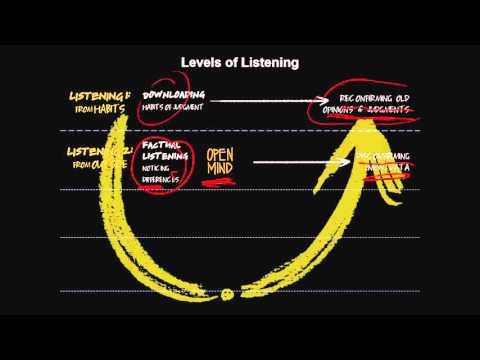
Dr Joanne Davila presents the research on what distinguishes relationships that last from those that don't — moving beyond communication skills to the deeper capacities of insight, mutuality, and emotion regulation.

Dr Kristin Neff, the world's leading researcher on self-compassion, presents the evidence that self-compassion — not self-esteem — is the key predictor of emotional resilience and healthy relationship functioning.

Dr Fred Luskin, director of the Stanford Forgiveness Project, presents the science of forgiveness in intimate relationships — distinguishing forgiveness from reconciliation and the nine-step HEAL method for releasing grievances.

Dacher Keltner, director of the Greater Good Science Center at UC Berkeley, presents the neuroscience and evolutionary psychology of empathy — and why compassion is not a luxury but a biological imperative for human connection.

Logan Ury, behavioural scientist and Hinge's Director of Relationship Science, presents the research on how cognitive biases distort our dating decisions — and the evidence-based strategies for finding and building a lasting relationship.

TED-Ed's animated explainer on the neuroscience and evolutionary psychology of romantic attraction — the role of physical symmetry, scent, voice pitch, and the neurochemistry of the 'spark' that initiates romantic interest.

The School of Life explores the psychological mechanisms that lead us to choose partners who recreate familiar — even painful — childhood dynamics. A compassionate explanation of repetition compulsion and why 'chemistry' often points toward the familiar rather than the healthy.

Helen Fisher presents her research on the four broad personality types derived from neurochemistry — and the evidence on which types are most compatible with each other in romantic relationships.
Pamela Meyer, author of 'Liespotting', presents the science of deception detection — the verbal and non-verbal cues that signal dishonesty, and what the research reveals about how often we are deceived in our closest relationships.

Emma McAdam distinguishes codependency from enmeshment — and presents the therapeutic path to healthy interdependence. Essential viewing for anyone who loses themselves in relationships.

The School of Life argues that romantic love is an insufficient basis for a lasting relationship, and that the skills of tolerance, communication, and self-knowledge are more important than the intensity of initial feeling.

The School of Life's exploration of the psychology of loneliness — why it is not simply the absence of people but the absence of being truly known, and what it takes to build the kind of connection that genuinely alleviates loneliness.

Simon Baron-Cohen, Cambridge neuroscientist and author of 'The Science of Evil', presents the neuroscience of empathy — the empathy circuit in the brain, what happens when it is impaired, and the relationship between low empathy and relationship harm.
Go deeper
Explore our evidence-based guides grounded in peer-reviewed research — the same science behind these videos, in written form.
Browse Evidence-Based Guides →